Overview
What Stays Fixed, What Can Flex
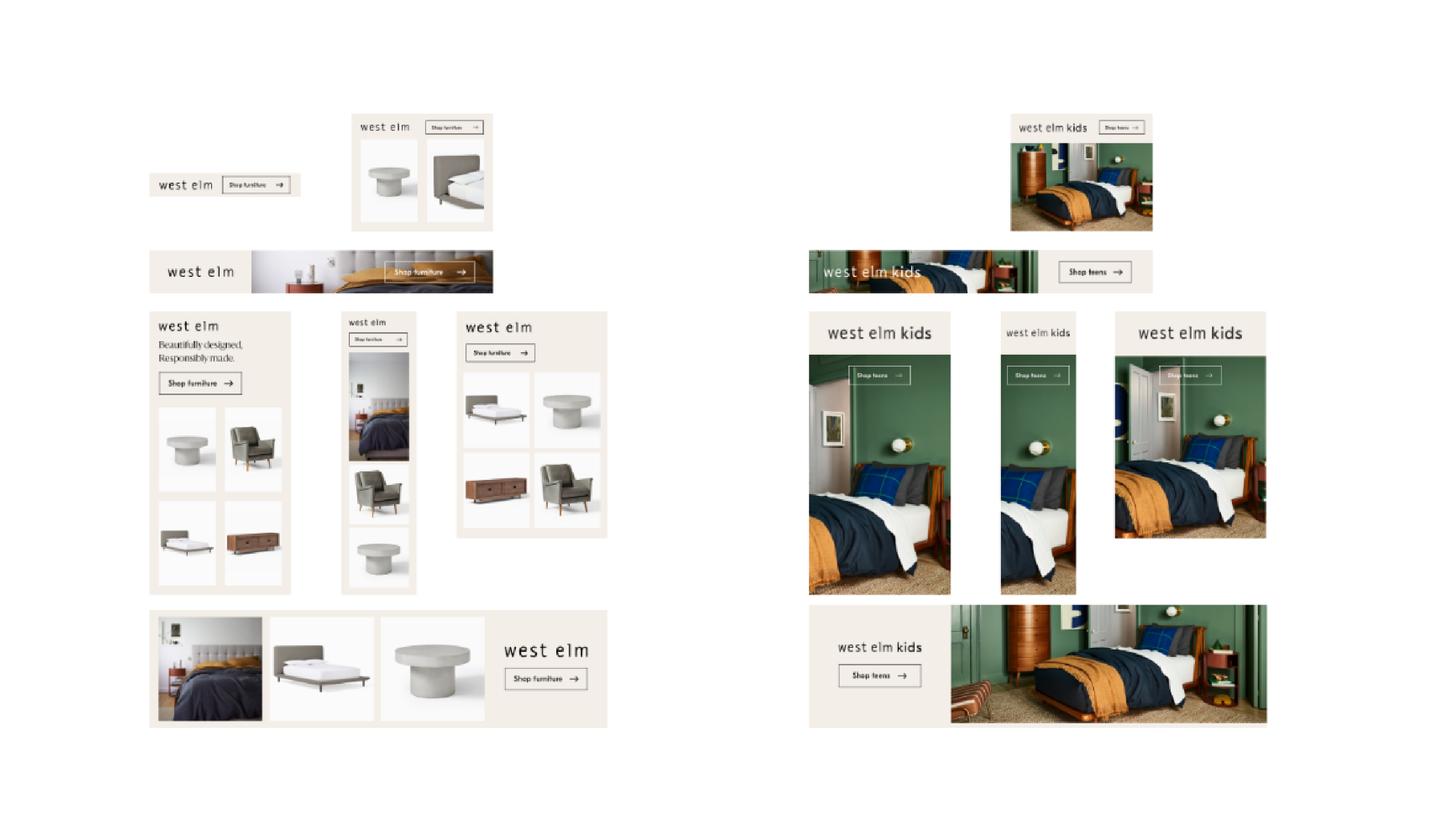
West Elm needed a brand identity for a new furniture line and a full campaign to support the launch. The brief wasn't "design whatever you want" — it was "stay unmistakably West Elm while making this feel new." Figuring out which elements were load-bearing and which were flexible is the same thinking behind a token system. I just didn't have that vocabulary yet.
New Line, Established Brand
Design a brand identity system for a small-to-medium furniture line, then extend it into a full campaign — emails, landing pages, digital ads, and in-store displays — without breaking the West Elm visual language.
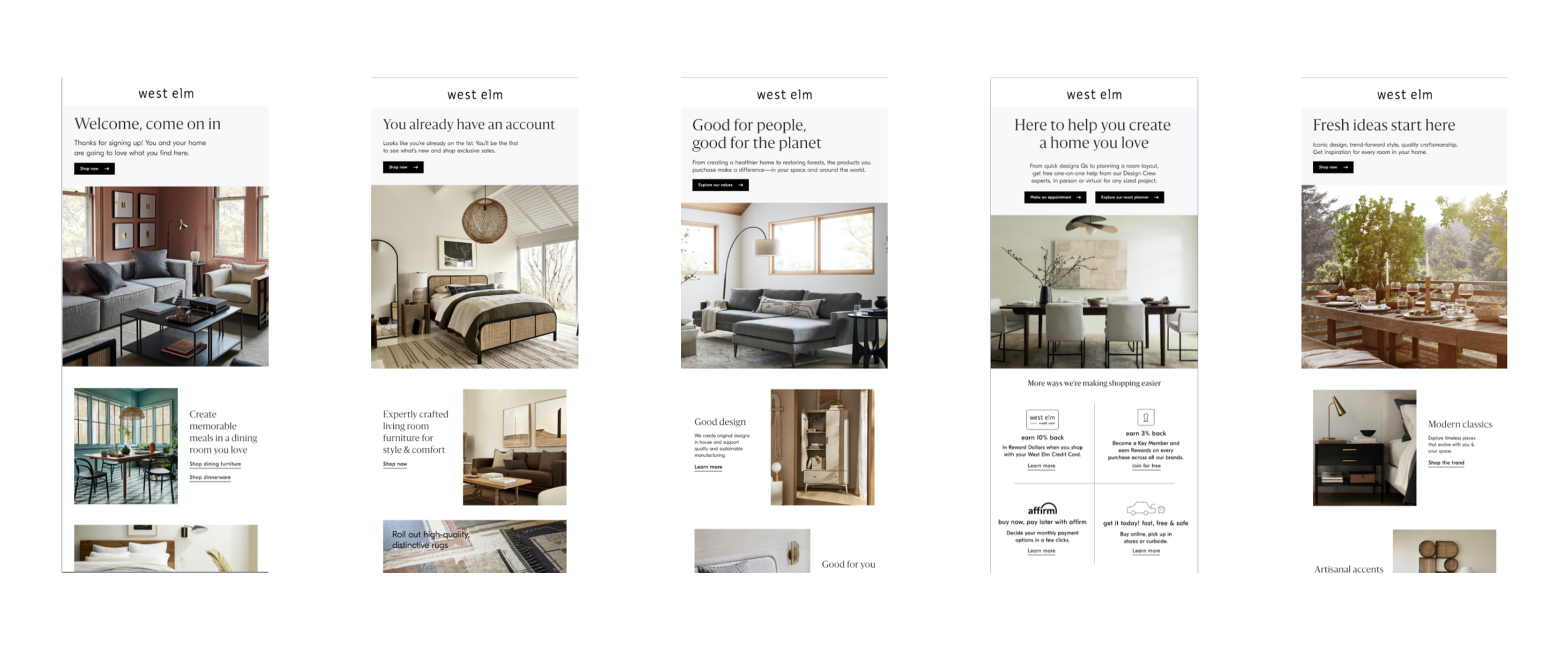
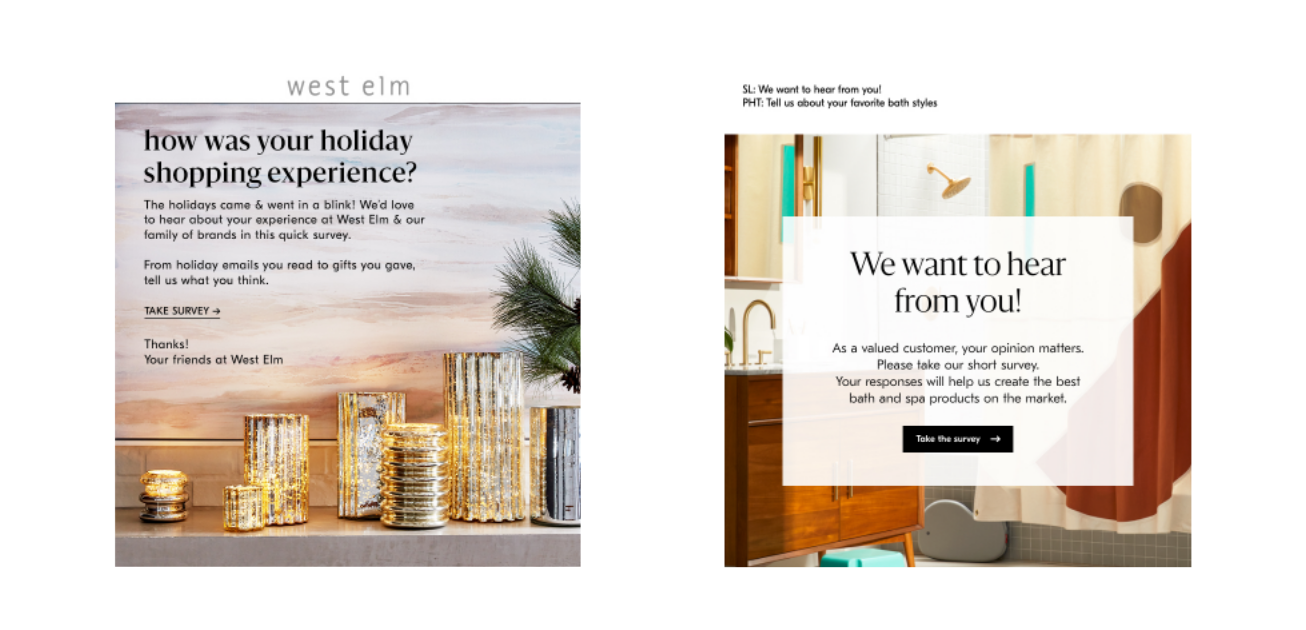
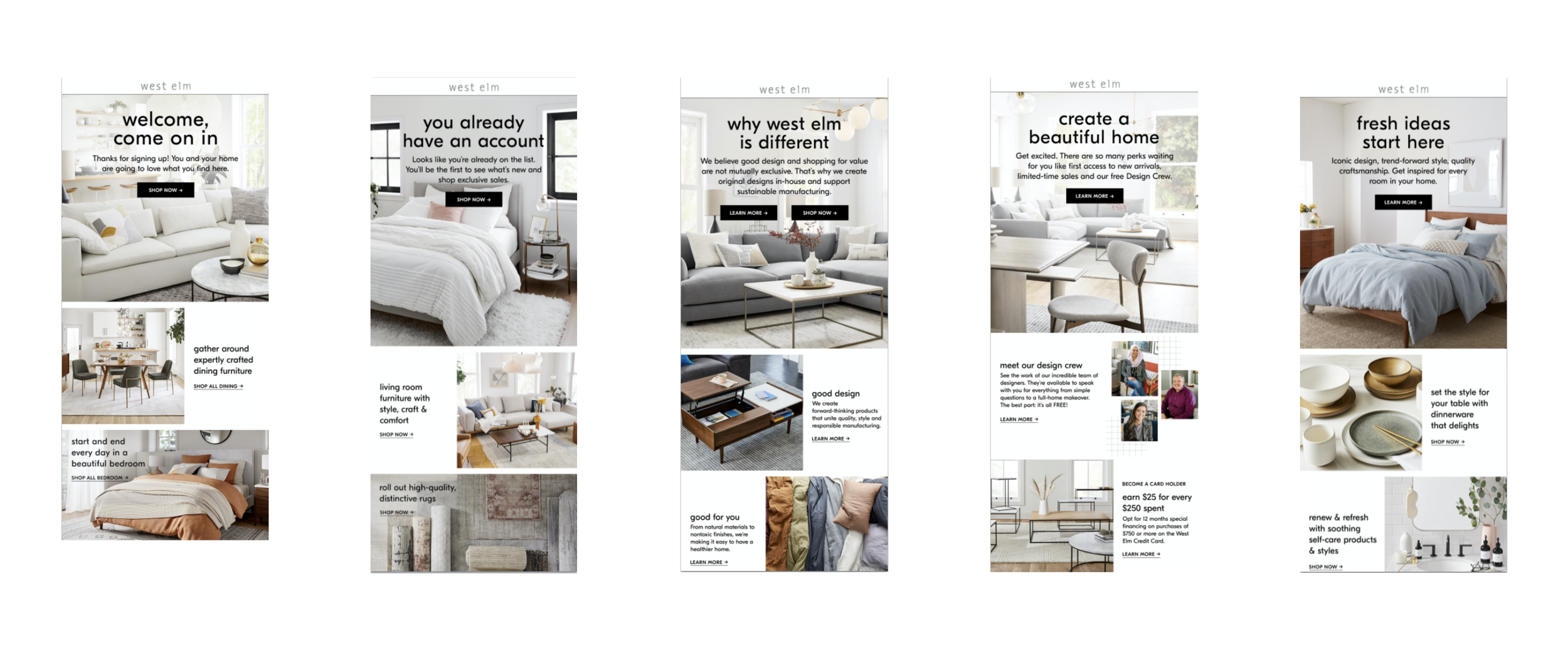
- 6 promotional emails + 4 newsletters
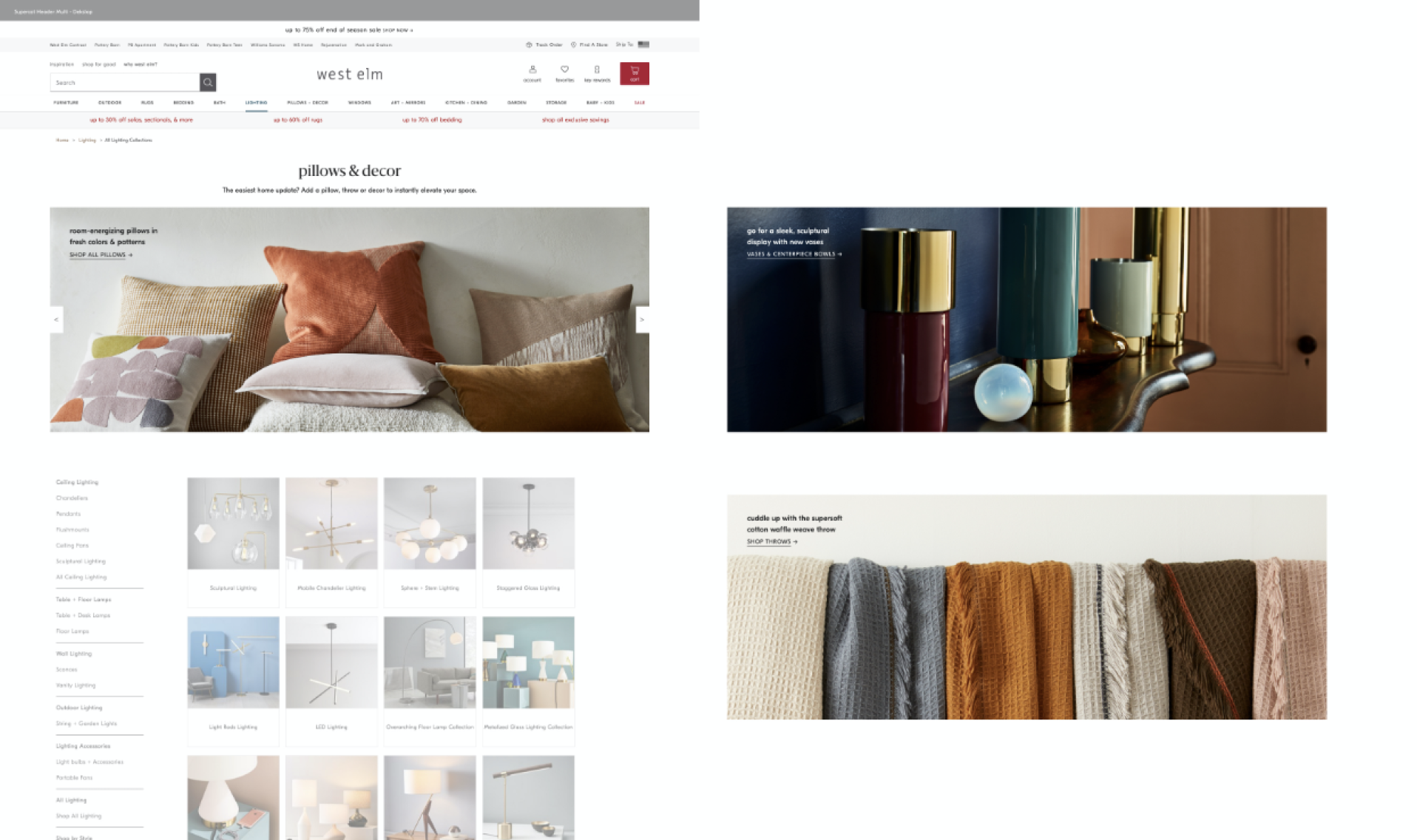
- Landing page designs for 5 product categories
- Page layout codes for e-commerce integration
- Campaign style guide for team consistency
2M+ Subscribers, 5 Categories
Campaigns deployed across West Elm's full email subscriber base during a critical spring launch window — the highest-traffic retail period of the year.
- Reached 2M+ customers across 5 product categories
- Visual system deployed across email, web, social, and in-store
- 10+ email templates maintained consistency across seasonal variations
- Template system enabled A/B testing without redesign overhead
Visual Showcase
Brand System & Email Campaigns
Design Process
Brand Consistency + Campaign Flexibility
Working within an established brand required building a system flexible enough for campaign variation while strict enough to stay unmistakably on-brand.
What Stayed Fixed, What Could Flex
- Respected West Elm's core brand guidelines — typography, color, tone
- Introduced campaign-specific visual elements (patterns, photo treatments) within those guardrails
- Maintained consistency across 10+ email templates
- Supported seasonal variations without requiring redesign
Mobile-First, Scannable, Shoppable
- Mobile-first: 60%+ of West Elm's email opens happen on mobile
- Clear visual hierarchy: Hero image → product grid → CTA
- Short copy blocks and generous whitespace for scannability
- High contrast ratios, alt text, and semantic HTML for accessibility
- Template architecture designed for A/B testing CTA placement
Learnings
What This Work Taught Me
Constraints aren't limitations — they're the design brief. Working within West Elm's brand system taught me the discipline of constrained creativity, which translates directly to working within a mature product design system.
- Marketing team — campaign strategy and copy direction
- Merchandising — product photography priorities
- E-commerce dev — email template coding and deployment
- Clear product hierarchy (hero vs. supporting products)
- CTA placement strategy (above fold, mid-content, footer)
- Template systems that support A/B testing
- Page load performance considerations for email clients